What the Capuchos is
Eight friars lived here from 1560, in cells you have to stoop to enter, lined with cork against the damp. The convent cost €11 to visit and takes an hour, and it is the only monument in Sintra where the point is how little there is.
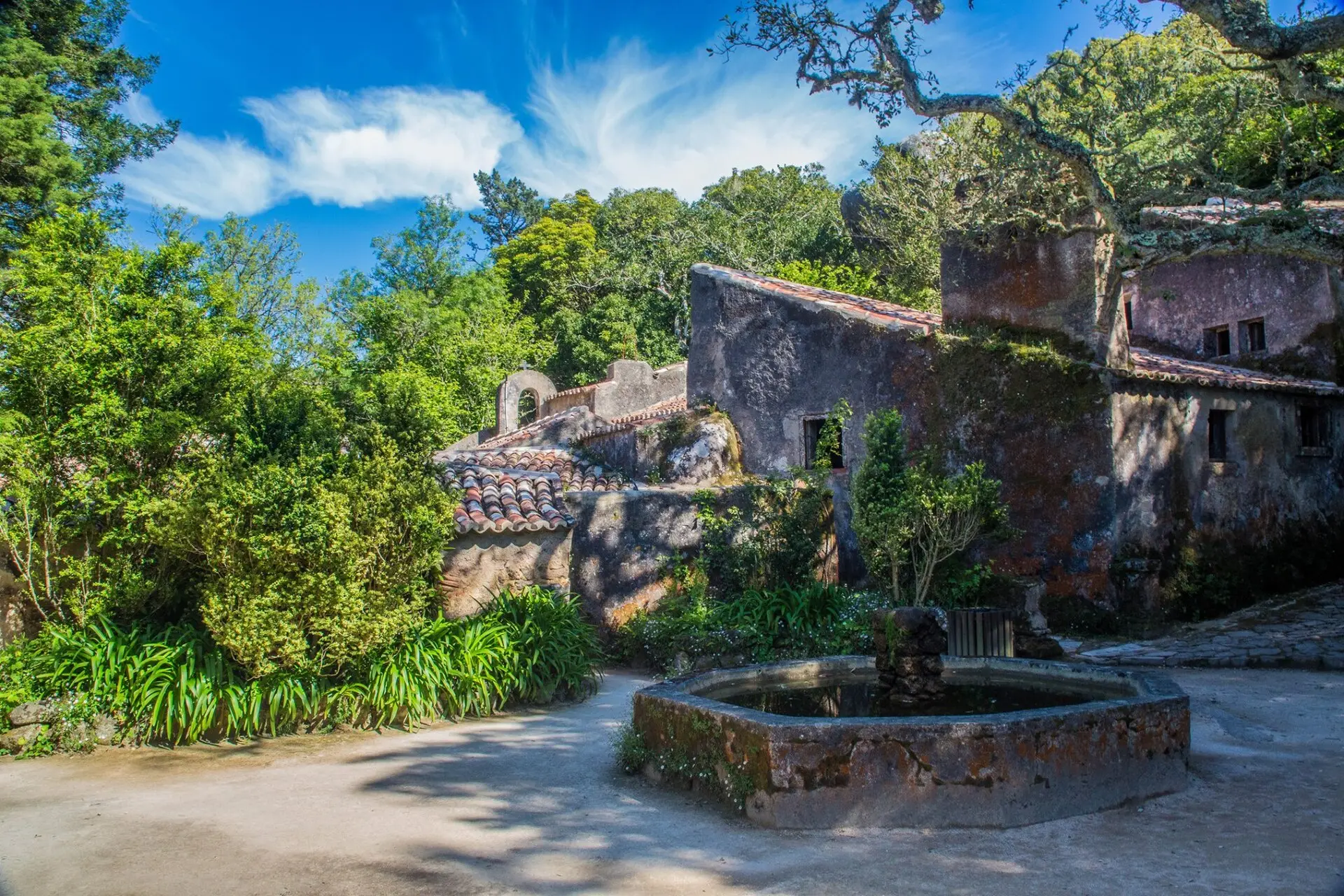
Everything else on this hill was built to impress somebody. This was built to be poor. The rooms are small because small was the intention, the walls stop where the granite starts, and the friars treated the boulders they built against as divine constructions, which is why half the convent has rock for a wall.
The woods around it are the other half of the visit. The community that lived here kept the forest intact, and what survives is one of the best pieces of Sintra’s primitive woodland. I’ve stood in the courtyard under the cork oak with nobody else there, and it’s the closest Sintra comes to quiet.
A short history
Franciscans founded the convent in 1560 and stayed for nearly three hundred years. When the religious orders were dissolved in Portugal, the friars left in 1834, and the buildings went through a long period with no maintenance at all. The state acquired the site eventually, and since 2000 it has been managed by Parques de Sintra, the public company that runs the monuments of the Cultural Landscape of Sintra, UNESCO listed since 1995.
That long gap of neglect matters when you walk around. What you see is the original fabric rather than a reconstruction: cleaned, and held together where it was failing.
The cork and the cells
Cork is the material that makes the place. It lines ceilings and door frames, it panels the insides of cells, and it was used because it is what the hill gave them: warm, dry, and free. Four hundred years later most of it is still in position, and I can’t think of a better argument for the material.
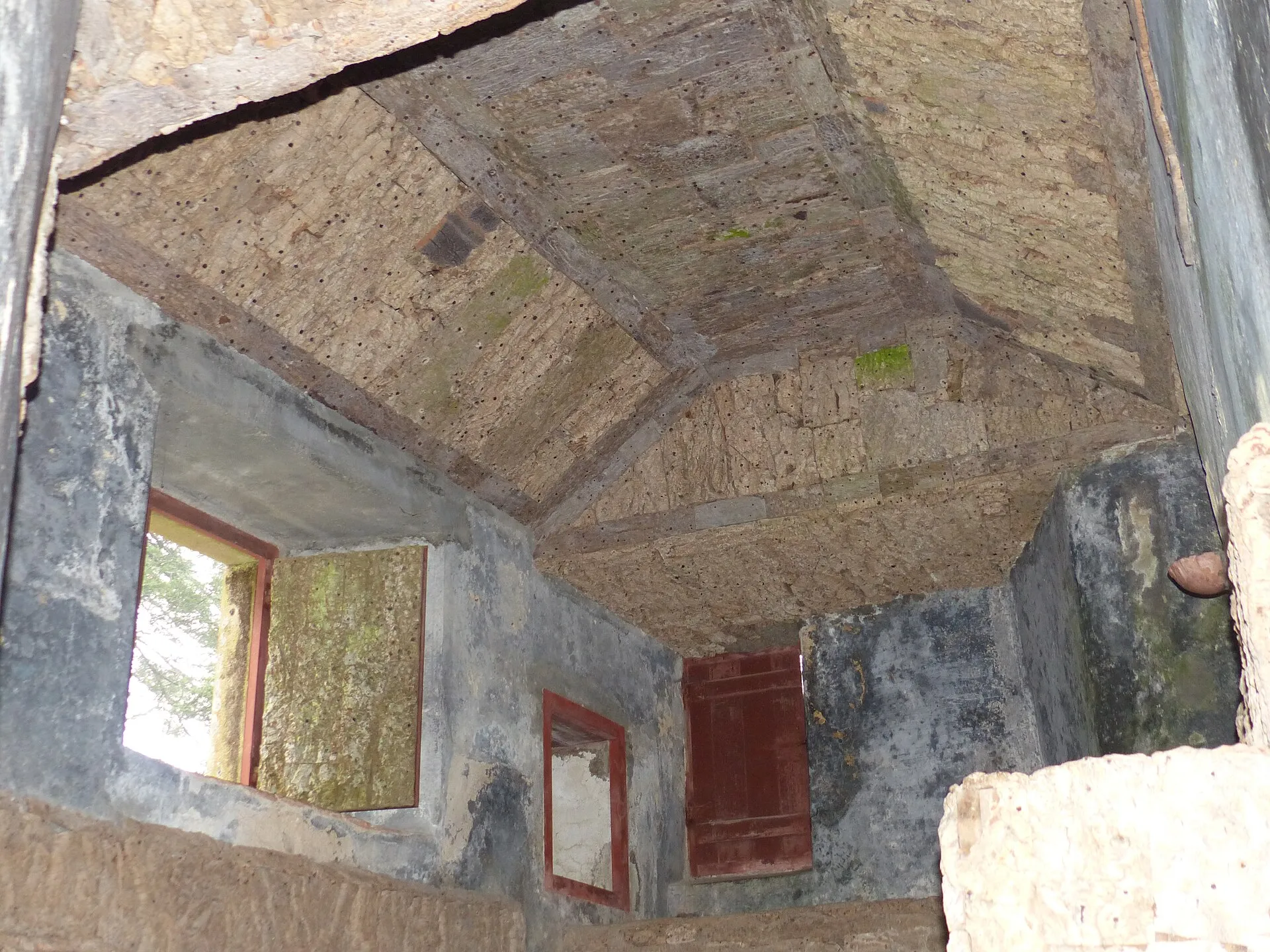 A cell, with cork on the ceiling and the door frame. Photo: Wikimedia Commons, CC.
The route takes you through the cells and the refectory, then the chapel and the small chapter room. None of them are big. Doorways are low enough that tall visitors will hit their heads at least once. I’ve done it twice. Ceilings press down. After twenty minutes of this the courtyard feels enormous, which is presumably what the architecture was for.
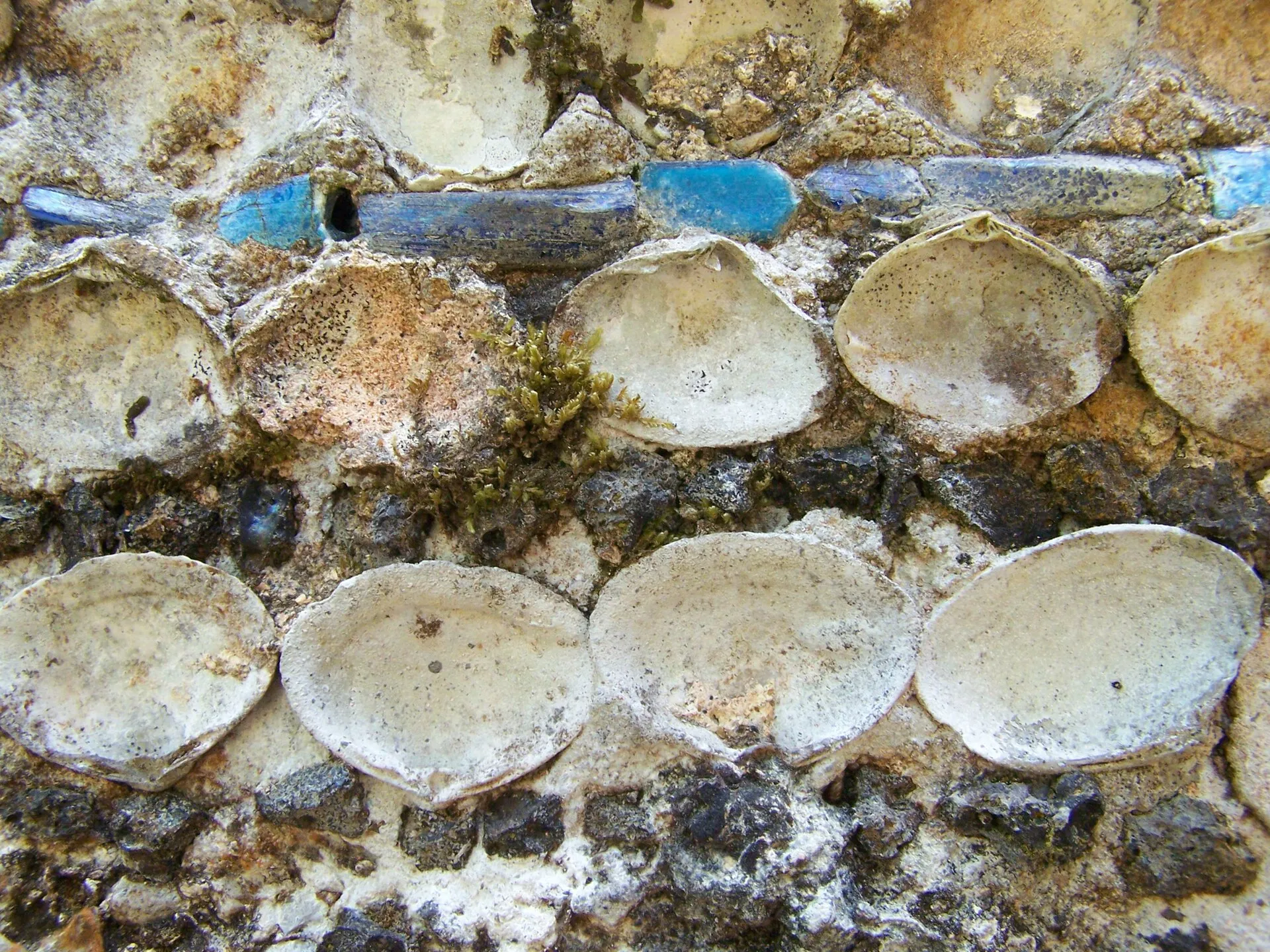 Shells and pebbles pressed into the plaster, the only decoration the friars allowed themselves. Photo: Wikimedia Commons, CC.
The restoration
The convent was restored with money from the ticket sales of other Parques de Sintra monuments, which is worth knowing when you buy your €20 ticket at Pena: some of it comes here. The work covered all the buildings and their decoration, cleaned the cork, added a fire safety system to protect the site from forest fires, and rehabilitated the paths so that more of the convent could be reached by people with limited mobility.
It won a European Heritage Award. The jury noted that the remote location and the poor state of the buildings made the job unusually hard, and praised the result as an example for humble heritage, the kind of place that draws visitors away from the crowded sites.
Tickets and hours
Prices updated Aug 29, 2026?
| Ticket | Price |
|---|---|
| Adult 18 to 64 | €11 |
| Young 6 to 17 | €9 |
| Senior 65+ | €9 |
| Family, 2 adults + 2 young | €29 |
The convent’s open from 09:00 to 17:30, and the last ticket and last admission are both at 17:00. There are no timed slots and no queues to speak of. The ticket office closes from 12:00 to 13:00 and the machine beside it keeps selling.
Getting there
This is the difficult part, and I would rather be honest about it than have you standing at a bus stop in the forest.
By bus. The nearest public transport is line 1253 from Sintra station, and the official page for the monument says the stop leaves you a 40-minute walk from the convent. The walk is on a forest road with no pavement and no shade in places. It is a fine walk in April and a bad idea in August at two in the afternoon.
By taxi. From Sintra town this is the practical option, and the one I use when I’m not driving. Agree the return trip with the driver before you get out, because nothing passes the gate.
By car. Take the EN247 towards Colares as far as Pé da Serra, then turn onto the EN247-3 for the convent. From Cascais it is the same road in the other direction. There is parking at the gate and the last stretch is narrow.
The same 1253 line serves Monserrate and carries on to Cabo da Roca, so if you are doing this side of Sintra without a car, the convent is the one stop that costs you about 80 minutes of walking for the round trip.
When to go, and who should skip it
I come in the morning, when the light comes through the trees at an angle and the moss on the walls is still wet. Rain suits the place. So does winter, when the forest smells of leaf mould and there is nobody at all.
The trade-off is plain: this is the hardest monument in Sintra to reach and the least spectacular to look at. If you have one day, or if what you came for is the painted rooms and the view from the terrace, go to Pena and leave the Capuchos for a second visit. If you have already done the palaces and want to understand what this hill was before the kings arrived, this is the place that explains it.
Questions
Is the Convento dos Capuchos worth visiting?
It is, if you have already seen the palaces and want the opposite of them. This is a poor building of eight cells lined with cork, wedged between granite boulders in the forest, and it says more about how people actually lived in Sintra than Pena does. If your day is short, or if you came for views and painted rooms, spend the time on the hill instead.
How do you get to the Convento dos Capuchos without a car?
With difficulty. Bus 1253 from Sintra station is the nearest public transport, and the official page says the stop leaves you a 40-minute walk from the convent, on a forest road with no pavement. A taxi from Sintra town is the sensible alternative, and it is worth agreeing the return with the driver, because there is nothing to hail at the gate.
Why is it called the cork convent?
Because cork is on everything. The friars lined ceilings, door frames and cell walls with it for insulation against the damp and the cold of the hill, and it is still there after four centuries. Cleaning that cork was one of the main tasks of the restoration.
How long do you need at the Convento dos Capuchos?
An hour covers the whole convent at a slow pace, including the chapel and the cells. Add half an hour if you want to sit in the woods afterwards, which is what the place is for.
Official sources: Parques de Sintra, Convent of the Capuchos · Parques de Sintra, Horários e Preços · European Heritage Awards, Convent of the Capuchos