What the palace is
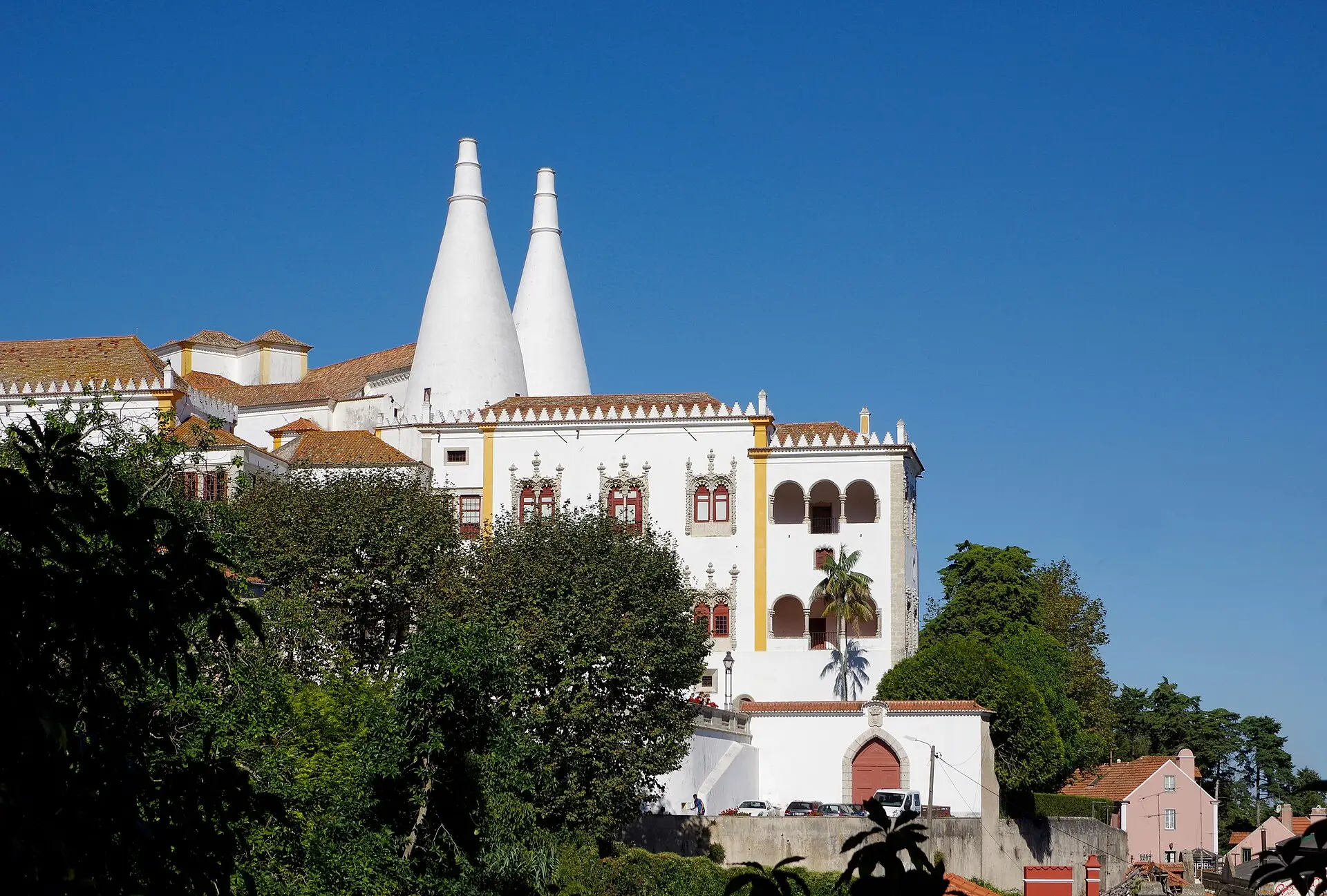
The two white cones on the skyline of Sintra are the kitchen chimneys of this palace, 33 metres tall, and they have been the emblem of the town for six centuries. Everything else about the building is low and rambling. It’s a set of halls and courtyards added by one king after another, wrapped around the square at Largo Rainha D. Amélia in the middle of the old town.
This is the only medieval royal palace still standing in Portugal, and it was in royal use from the early 1400s until the monarchy ended in 1910. Five hundred years of continuous royal occupation is the thing to hold on to while you walk around, because nothing here was designed as a single set piece. Rooms were added when a king needed a room, and the result is a building that makes sense the way a house makes sense.
I bring people here at the end of the day, after the hill. It costs €13, it takes an hour, it is the interior the wind on the hill does not touch, and it is five minutes from the pastry queue at Piriquita.
A short history
The site was a Moorish governor’s residence before Afonso Henriques took Sintra in 1147. What you see now begins with King João I around 1415, who built the kitchens, the Swan Room and the central block. Manuel I added the wing with the Arab Room in the early 1500s, and paid for the tiles that make the palace what it is. The tile collection here is the oldest and finest in Portugal, much of it brought from Seville at a time when Portuguese workshops could not yet produce anything comparable.
The unhappiest story in the building is Afonso VI. Declared incapable and deposed by his brother, the king was confined in a small room off the chapel gallery. He spent nine years there and died in it in 1683. The floor tiles by the door are worn in a track, and the guides will tell you he wore them down pacing. That part is a story rather than a fact, but the room is real and it is on the route.
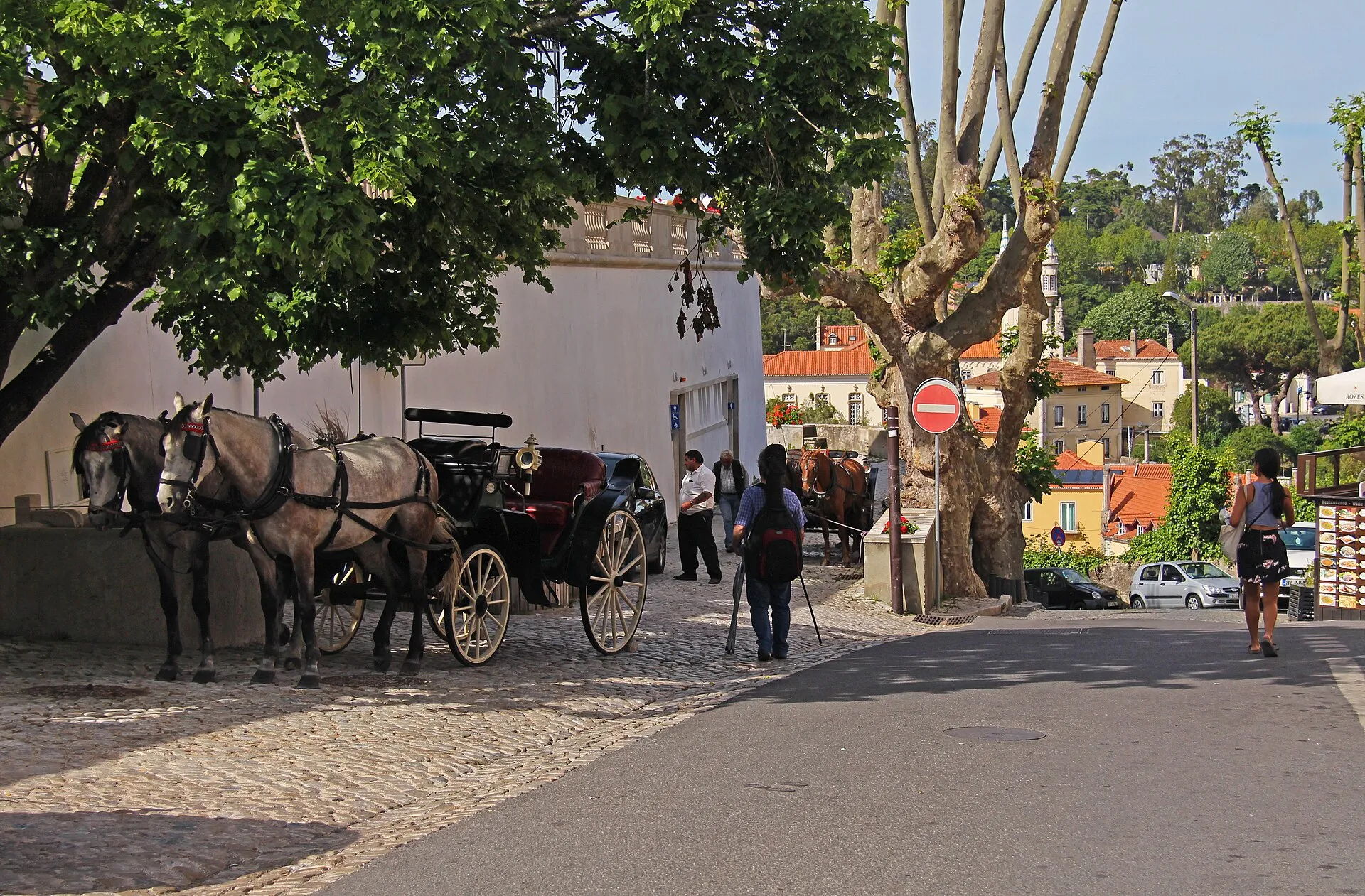 The palace sits in the middle of the old town, five minutes from the square. Photo: Wikimedia Commons, CC.
The rooms worth your time
The kitchens. Go here first if you have a child with you, and last if you want to leave on a high. You stand at the bottom of the two cones, looking up into a white funnel wide enough to roast an ox, which is what they were for. The copper pots along the wall are the originals.
The Swan Room. The long hall where the court dined. There are 27 swans painted on the wooden ceiling, each in a different position, each wearing a gold collar. It is the room João I used, and the ceiling is the reason people stop talking when they walk in.
The Magpie Room. A ceiling of 136 magpies, each holding a rose and a ribbon reading Por bem, for good. The story is that João I was caught kissing a lady in waiting and told the queen it was por bem, meant well. He then had the ceiling painted to give the gossiping court its own portrait. Portuguese kings did not usually answer gossip with a ceiling.
The Coats of Arms Room. The formal one. A domed wooden ceiling carries 72 stags with the arms of Portuguese noble families, and blue and white tiles cover the walls below. It was finished around 1515 and it is the room that photographs worst and impresses most in person.
Tickets
Prices updated Aug 29, 2026?
The essential visit is the one to buy; it covers the whole route through the rooms and the kitchens. The Total ticket adds Queen Maria Pia’s residence, a small-group visit to the private rooms of the last royal family; the Guided and Staged visits add a guide or actors, and both include the residence too?. They are worth it only if you specifically want that.
| Ticket | Adult 18-64 | Youth 6-17 | Senior 65+ | Family 2+2 |
|---|---|---|---|---|
| Essential visit | €13 | €10 | €10 | €35 |
| Total visit | €35 | €20 | €25 | €95 |
| Guided visit | €45 | €20 | €35 | €105 |
| Staged visit, with actors | €65 | €20 | €50 | €130 |
| Garden only | free | free | free | free |
Children under 6 go free on every ticket. There are no timed entry slots here, unlike Pena and Regaleira, so you can turn up and buy at the gate. You don’t need to plan the day around a booking. The ticket office shuts for lunch from 12:00 to 13:00 and the machine beside it keeps working.
Opening hours
Hours checked Aug 29, 2026?
| Opens | Closes | Last ticket / entry | |
|---|---|---|---|
| Palace | 09:30 | 18:30 | 17:30 |
| Gardens | 09:30 | 18:30 | 18:00 |
How to get there
From Sintra station it’s a 10 to 15 minute walk, downhill at first and then flat along the road into the old town. You’ll see the chimneys before you see the palace. Buses 434 and 435 both stop in the centre, which matters if you are coming down from Pena with tired legs rather than starting here.
Do not drive in. The historic centre is closed to non-resident cars. The nearest parking is at the station or in the peripheral car parks, which leaves you walking the same ten minutes anyway.
When to go
Late afternoon, between 16:00 and the 17:30 last entry. The coaches have gone up the hill or back to Lisbon, the rooms are quiet, and the light through the west windows of the Swan Room is the best of the day.
The other occasion for this palace is the afternoon when the weather has dismantled whatever you had planned for the hill. This is the palace that stays open when wind shuts the Moorish Castle and cloud swallows Pena, and it is indoors from the first room to the last. On a wet January afternoon I have had the Magpie Room to myself twice.
Questions
Is it worth going inside Sintra National Palace?
Yes, if you want to see how Portuguese kings actually lived rather than how a 19th-century king imagined the Middle Ages. It is the only medieval royal palace left in the country and it was in use for five hundred years, which shows in the rooms. Give it an hour. If your day is short and you have to choose one interior, most people will be happier inside Pena.
Which is better, Sintra National Palace or Pena Palace?
Pena is the picture; this one is the history. Pena is on the hill, costs €20, runs on timed entry and closes its terraces in wind. The National Palace is in the town, costs €13, takes walk-ins, and is open when the hill is in cloud. If you have one day, do Pena in the morning and this one late in the afternoon on your way back to the station.
Is the National Palace of Sintra free?
The palace is not, at €13 for an adult. The garden below it is free entry, with no ticket. Children under 6 go into the palace free, and residents of the Sintra municipality have their own arrangements at the ticket office.
How long do you need at Sintra National Palace?
An hour covers the route at a normal pace, and 90 minutes if you stop to look at the ceilings properly. It is the quickest of the big Sintra interiors, which is why it fits at the end of a day when Pena and the castle have taken the morning.
Official sources: Parques de Sintra, Horários e Preços · Parques de Sintra, National Palace of Sintra