What is actually there
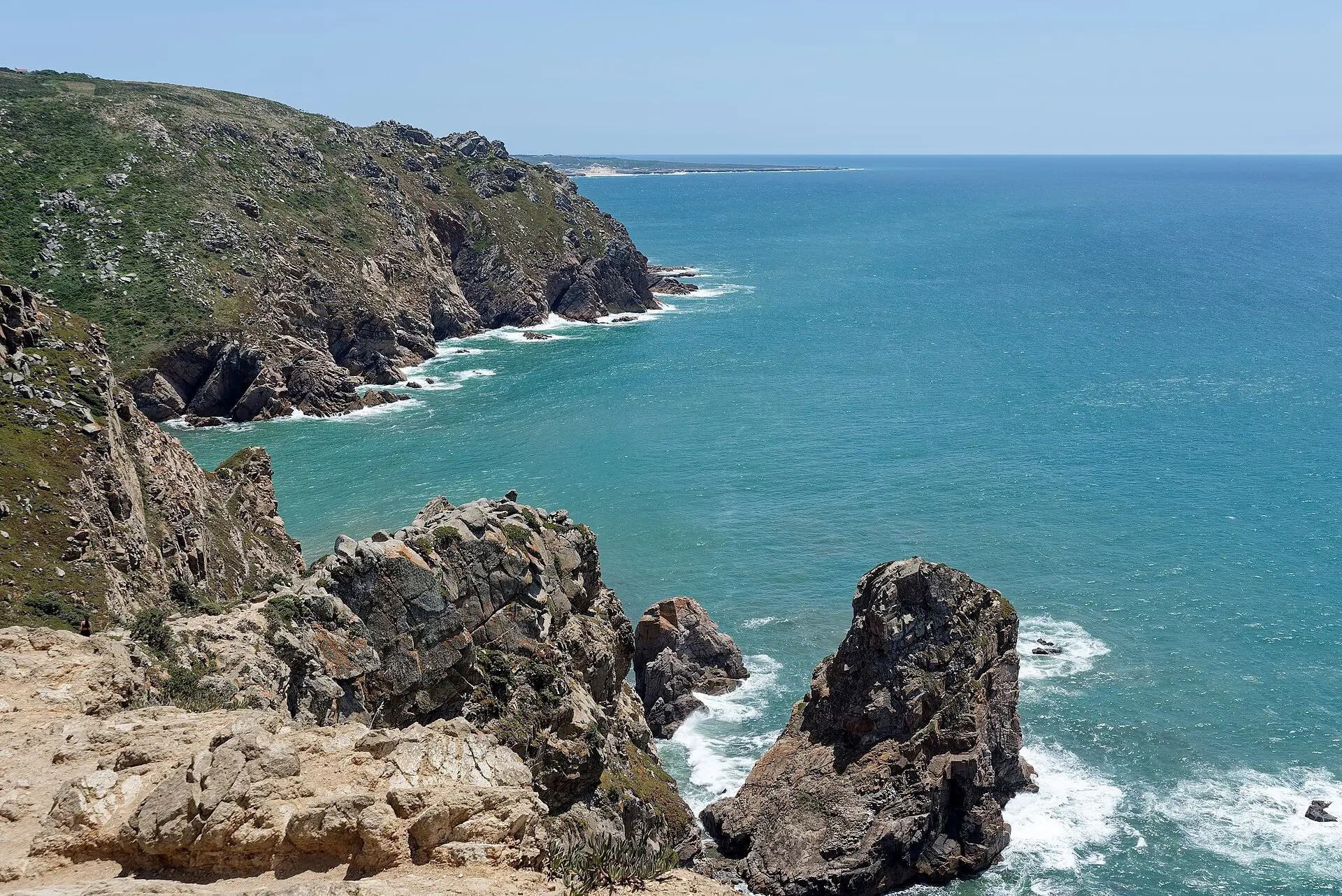
Cabo da Roca is a headland of dark rock 140 metres above the Atlantic, with a lighthouse, a car park, a café and a stone cross. That is the whole inventory. People come because of what the cross says: Onde a terra acaba e o mar começa, where the land ends and the sea begins. The line is from Camões, and the map agrees with it. This is the westernmost point of mainland Europe, at 9°30’ west.
I take every visitor here and I always say the same thing on the way: don’t expect a place, expect a view and a wind. The wind is the part nobody photographs. It comes off the ocean with nothing in front of it for three thousand kilometres, and it is cold in August. I have been here in a T-shirt in July and regretted it. The cliff path along the top is the reason to stay longer than the ten minutes it takes to photograph the cross.
The lighthouse
The lighthouse was one of six ordered along the Portuguese coast by the charter of 1 February 1758, part of the rebuilding programme that followed the earthquake which had flattened Lisbon three years earlier. It started working in 1772 and has been in service ever since, which makes it the second oldest surviving lighthouse on the Portuguese coast. The tower is white with a red lantern and a red walkway, and it stands inside a walled courtyard behind the car park.
You can go in. Parques de Sintra runs the courtyard and a small interpretation area for €5, and a panoramic visit that takes you up the tower for €10. The essential ticket is worth it on a bad weather day, when you want twenty minutes out of the wind. The panoramic visit is worth it if you like lighthouses. The view from the lantern is the same coast you get free from the cliff, seen from a little higher.
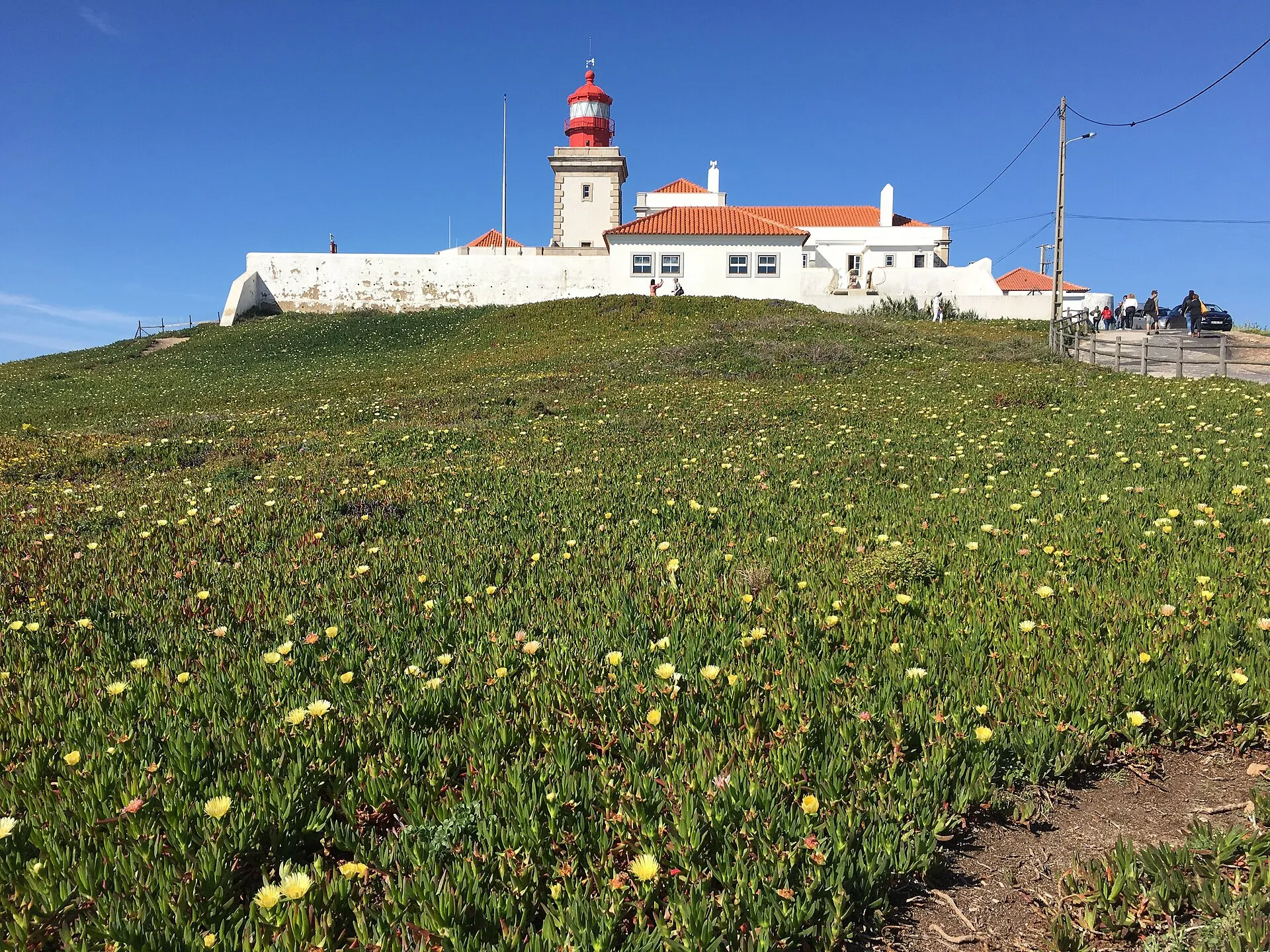 The lighthouse in spring, when the carpobrotus flowers on the headland. Photo: Wikimedia Commons, CC.
The walk
Two walks start at the car park and both are free.
North along the cliff. A path runs from the cross along the top of the cliffs towards Praia da Ursa, and fifteen minutes of it gets you away from everybody. The view back at the cape, with the lighthouse standing on the headland and the cliffs falling away below it, is better than any view you get from the cape itself. Stay away from the edge; the rock is undercut in places and there are no railings.
Down to Praia da Ursa. The beach below the northern headland is one of the best on this coast and one of the hardest to reach. It’s an unmarked scramble down a gully, 30 minutes down and 45 back up, with a rope in one section. I do it in boots, in daylight, and not at all if the wind is up.
Tickets and hours
Prices updated Aug 29, 2026?
The cape and the cliffs are free at any hour. The ticket is only for the lighthouse.
| Ticket | Adult 18-64 | Young 6-17 | Senior 65+ | Family 2+2 |
|---|---|---|---|---|
| Essential visit, courtyard and interpretation area | €5 | €5 | €5 | €15 |
| Panoramic visit, up the tower | €10 | €5 | €7.50 | €20 |
| Opens | Closes | |
|---|---|---|
| Courtyard and interpretation area | 09:30 | 17:30 |
| The cape, the cross, the cliff paths | always open | free |
Getting there
Bus 1253 from Sintra. This is the one that matters, and it is the number most guides still get wrong. Scotturb’s old 403 does not exist any more. Those routes were absorbed into Carris Metropolitana, and the service from Sintra station to Cabo da Roca is now line 1253, a circular that goes out through Azóia to the cape and comes back to the station. The ride takes 41 to 51 minutes. Buses leave the station from 06:30 to 20:00, every 20 to 30 minutes through the day, weekends included. Get off at the stop called Cabo da Roca; the same loop takes you back to Sintra, the last one passing the cape at 20:46.
Bus 1624 from Cascais. Cascais terminal towards Sintra via Azóia and Almoçageme, which is the route to take if you are doing the coast from the other end.
By car. The EN247 from Cascais or from Colares. The car park is free and full from about 11:00 in summer.
When to go
Late afternoon. The light comes in from the west, the tour coaches have gone back to Lisbon, and the cape does the thing it is famous for. Sunset here is genuinely good. The last 1253 back to Sintra leaves the cape stop at 20:46, which makes sunset possible without a car for most of the year; check that time for your date before you settle in with your jacket.
Avoid the middle of the day between June and September. The car park fills, the queue for the certificate at the shop takes twenty minutes, and there is nowhere to stand at the cross alone. Fog is common in the morning and clears from the coast earlier than it clears from the Sintra hills, which is why Cabo da Roca works as a first stop on a grey day.
Questions
Is it worth going to Cabo da Roca?
For half an hour of standing on a cliff at the edge of a continent, yes. It is free, the drop is 140 metres, and on a clear evening you can see the coast all the way to Peniche. At noon in August it is a car park with a monument in it, so the hour you come matters more than at any other place in Sintra.
What is Cabo da Roca known for?
It is the westernmost point of mainland Europe, marked by a stone cross with a line from Camões: where the land ends and the sea begins. The lighthouse behind it has been working since 1772 and is the second oldest on the Portuguese coast.
How do you get to Cabo da Roca from Sintra?
Bus 1253 from outside Sintra station, a circular route that reaches the cape in 41 to 51 minutes and carries on back to Sintra. It runs from 06:30 to 20:00, roughly every 20 to 30 minutes through the day. The old Scotturb 403 no longer exists; those routes are now Carris Metropolitana.
Is there anything to do at Cabo da Roca?
Walk. The cross and the viewpoint take ten minutes; the path north along the cliff edge takes as long as you let it, and the descent to Praia da Ursa, a steep unmarked scramble, takes 30 minutes down and 45 back up. There is a café, a shop selling the certificate of your visit, and nothing else.
Official sources: Parques de Sintra, Cabo da Roca lighthouse · Parques de Sintra, Horários e Preços · Carris Metropolitana, line 1253