What the old town is
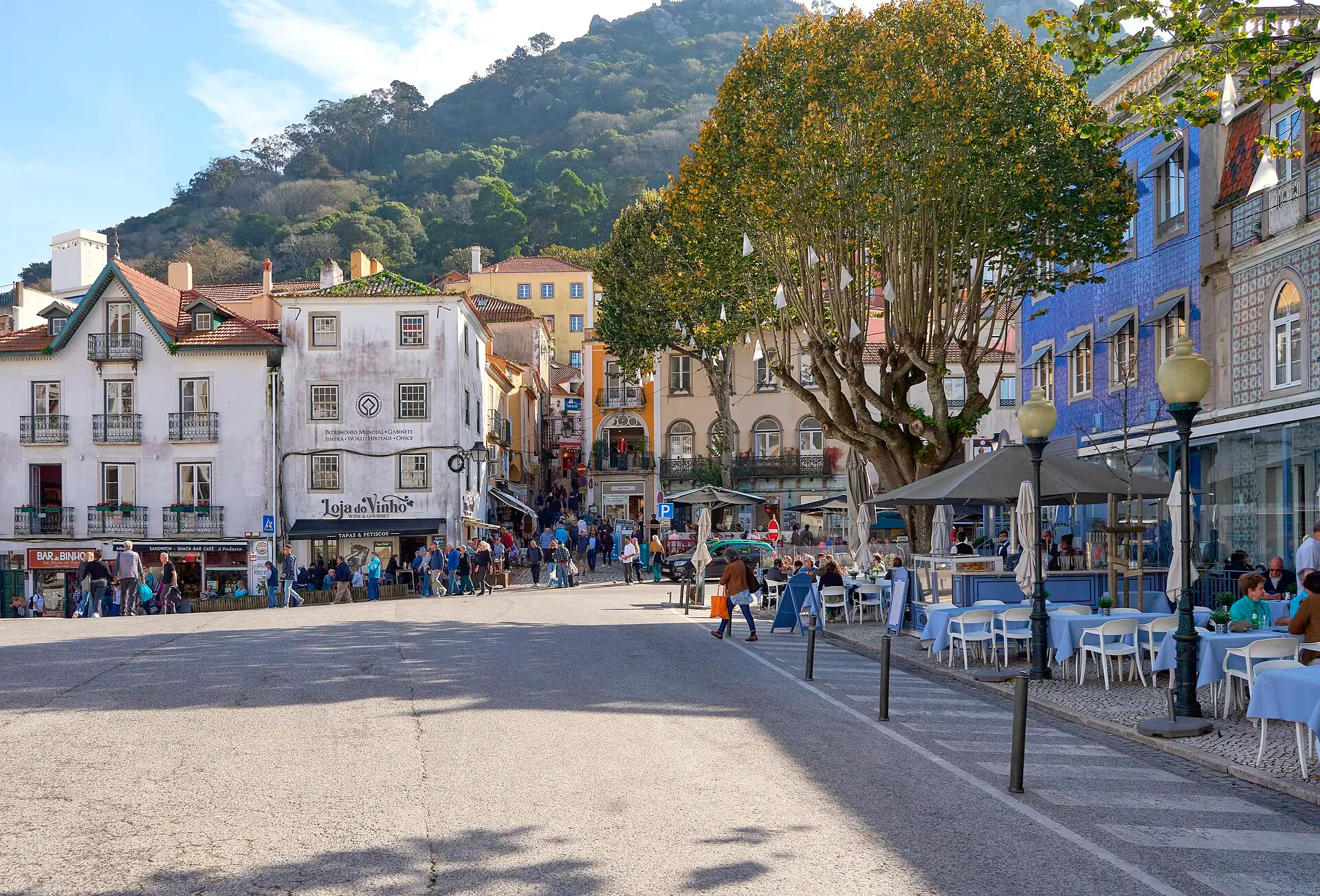
Sintra’s historic centre is a handful of sloping streets around the square in front of the National Palace, 15 minutes on foot from the station, and all of it is free to walk. Most visitors spend fifteen minutes here between a bus and a palace ticket, which is why the town feels like a corridor rather than a place.
Give it an hour and it changes. The streets are narrow and steep, the shopfronts still carry their original lettering, and every gap between the buildings shows you either the castle walls above or the chimneys of the palace below. The whole thing sits inside the UNESCO Cultural Landscape, which is why nothing has been knocked down and rebuilt.
I use the centre as the end of a Sintra day rather than the start. In the morning it’s a queue for the 434. By five in the afternoon the coaches have gone and you can sit on the square with a coffee.
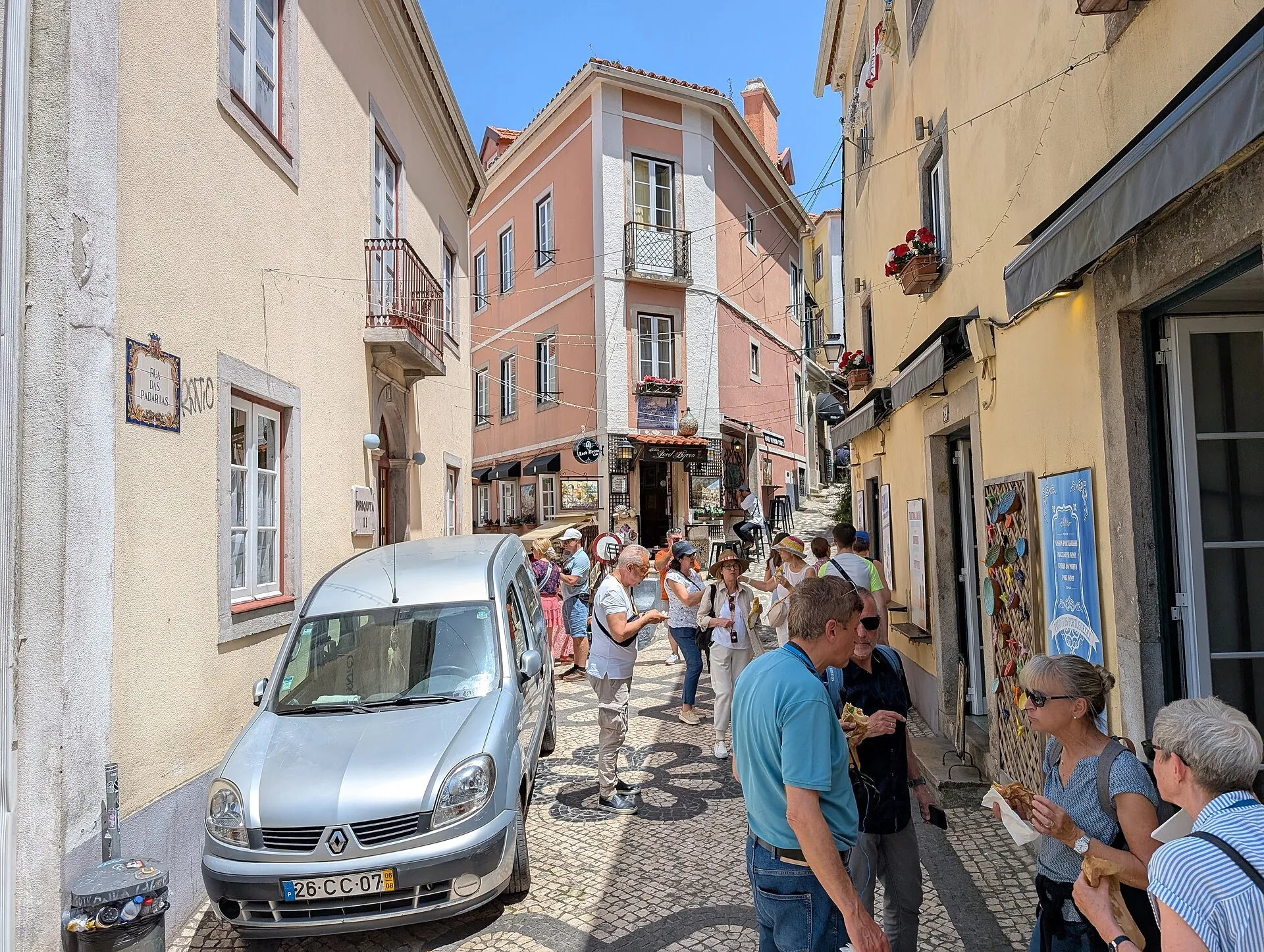 Rua das Padarias, the bakers’ street, where the queue outside Piriquita starts. Photo: Wikimedia Commons, CC.
The walk down from the castle
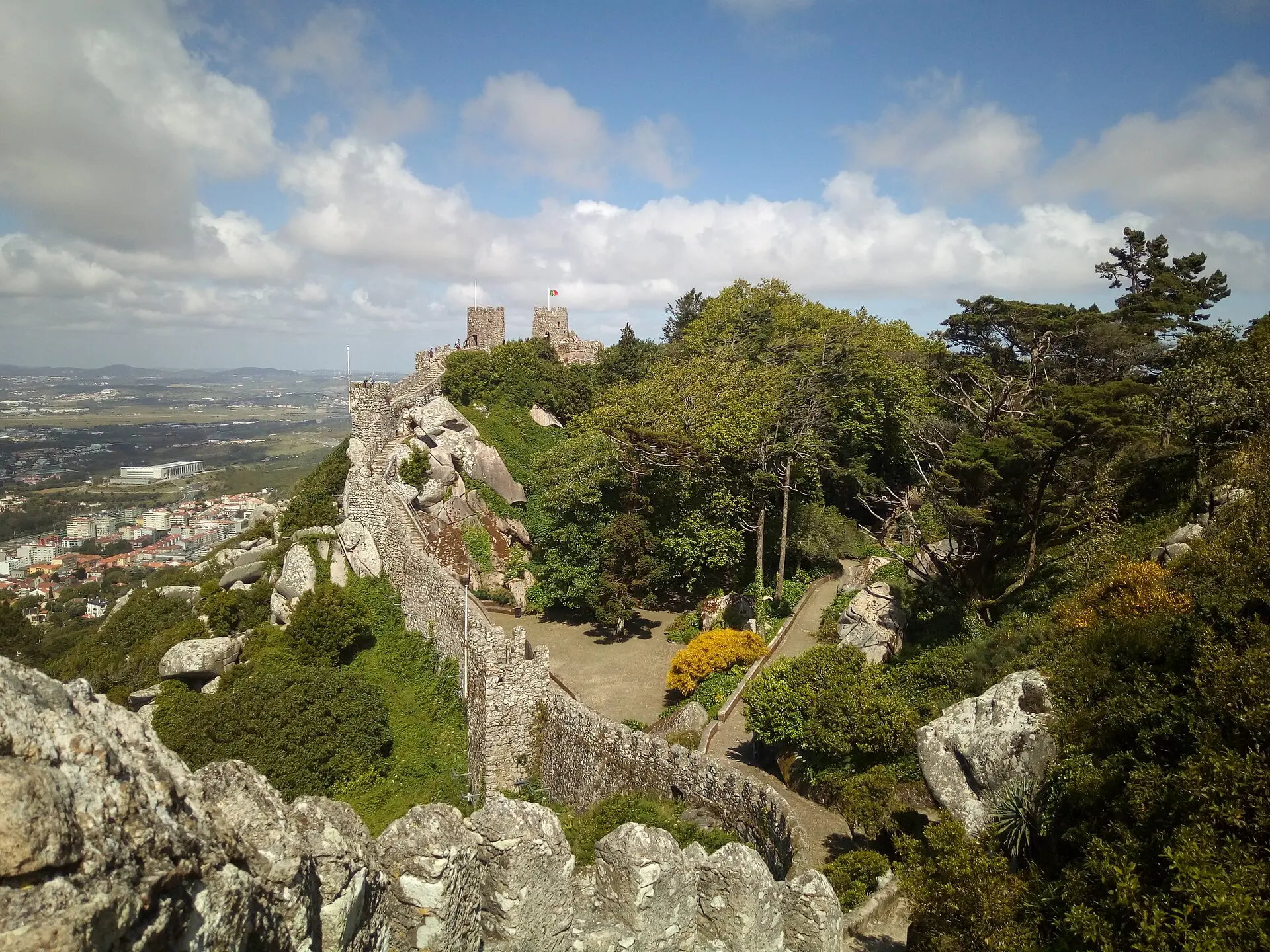
This is the part worth planning around, and hardly anyone does it. From the Moorish Castle you can walk down into the town through the Vila Sassetti garden. The path winds through chestnut and oak woods, past streams and granite outcrops, and comes out near the centre. It’s free, and it’s open from 10:00 to 18:00.
The villa halfway down was built for Victor Carlos Sassetti, who owned the Hotel Braganza in Lisbon and the Hotel Victor here. Its designer was Luigi Manini, the theatre scenographer who also built Quinta da Regaleira. The house looks like a small castle from northern Italy, where both Manini and the Sassetti family came from, and the garden is laid out the way a set designer lays out a stage.
Downhill I take about half an hour at a slow pace. Compare that with the queue for the 434 at the castle gate on a Saturday and the choice makes itself.
The square and the streets
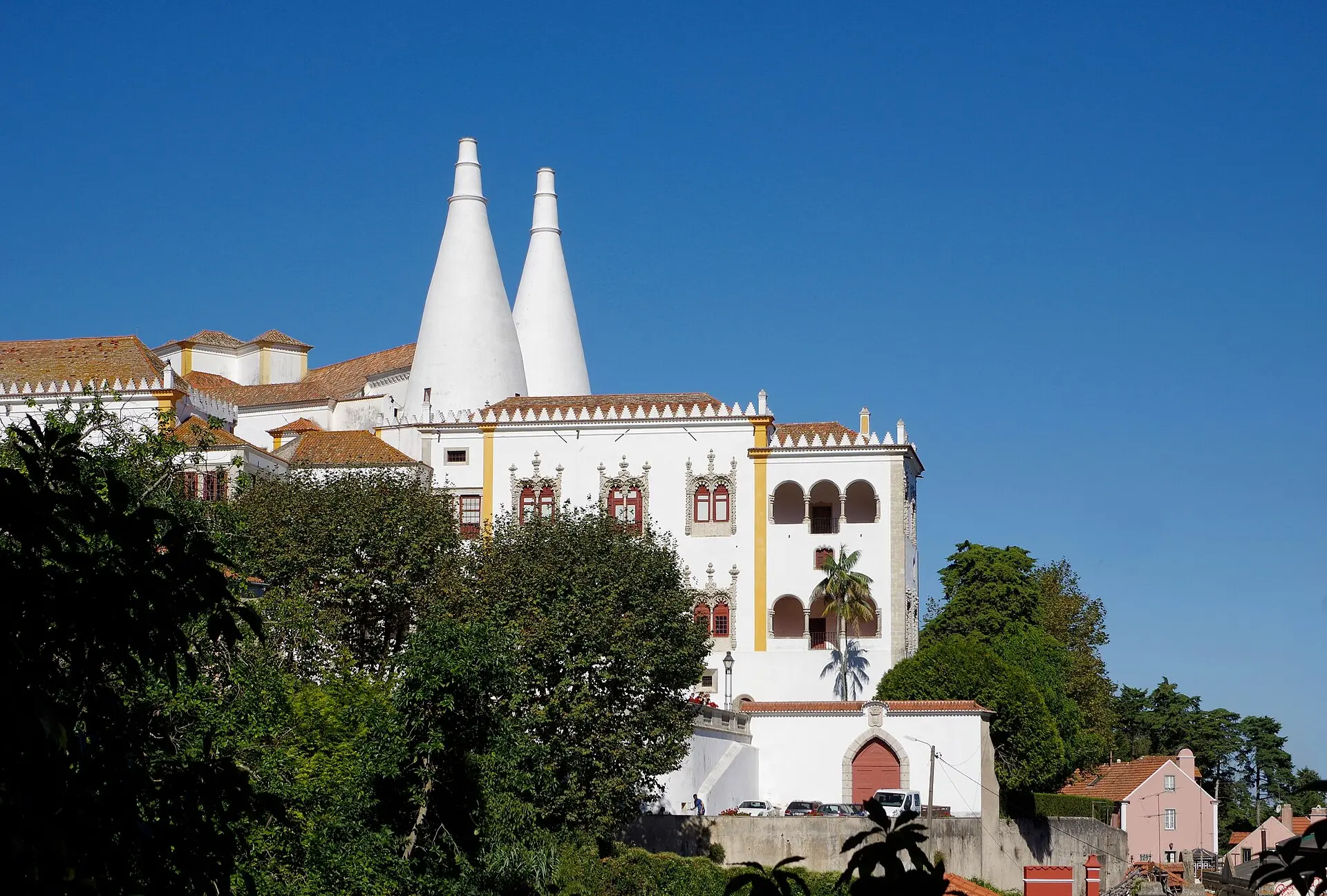
Largo Rainha D. Amélia is the square in front of the National Palace, and it is where the town starts. The palace garden is free to walk into, which almost nobody realises. I take visitors in there for ten minutes before lunch. The cafes on the square have the only tables in Sintra with a view of both the chimneys and the hill.
Rua das Padarias, the bakers’ street, runs up from the square. This is where the queue outside Piriquita forms for travesseiros, the long almond pastries that are worth waiting for. The queijadas, the cheese tarts everybody buys as well, are a matter of taste. I find them dry.
Rua Consiglieri Pedroso and Rua Visconde de Monserrate carry on west towards Regaleira. Ten minutes up that road gets you to the Regaleira gate on foot, which is quicker than any bus.
The church inside the castle
If you’re doing the walk from the top, stop at the Church of São Pedro de Canaferrim inside the castle walls before you start down. It was founded in the 12th century and served as the parish church until the 14th, and it now holds the interpretation centre for the castle’s history.
What’s inside is better than the label suggests, and I send people in there who would otherwise walk past. The displays come from excavations carried out between 2009 and 2013. Among the finds is a complete vase from the fifth millennium BCE. The Christian cemetery beside the church stayed in use for about three hundred years. This is the one place in Sintra where the story goes back past the kings and the romantics to the people who simply lived on the hill.
How to get there and around
From the station it’s a 10 to 15 minute walk, downhill at first and flat after that, and you’ll see the palace chimneys before you see the town. Buses 434 and 435 stop in the centre if you’re coming down from Pena with tired legs.
Don’t bring a car. The historic centre is closed to non-resident traffic, and the nearest parking is at the station or on the edge of town. You walk the same ten minutes either way.
When to go
Before 10:00 or after 17:00. Between those hours the streets carry every day-trip group in Sintra, the pavements are 1.5 metres wide, and the queue at Piriquita reaches the corner.
My own favourite is a wet afternoon, when the coaches leave early and the tiles go dark and shiny. The old town is the one part of Sintra that improves when the weather is bad, because everything you want is under a roof or five steps from one.
Questions
Is the old town of Sintra worth walking around?
Yes, and it costs nothing, but give it an hour rather than treating it as a corridor between palaces. The centre is ten streets of tiled shopfronts, a square in front of the National Palace and a couple of viewpoints back up at the hill. Most people see it at walking pace on the way to a bus and miss the point.
What is there to do in the old town?
Walk the streets around Largo Rainha D. Amélia, look into the National Palace garden, which is free, buy a travesseiro on Rua das Padarias, and take the path down from the Moorish Castle through the Vila Sassetti garden. That last one is the thing worth planning around.
Can you park in Sintra old town?
Not unless you live there. The historic centre is restricted to resident traffic, so leave the car at the station or in one of the peripheral car parks and walk in, which takes ten to fifteen minutes.
How do you walk from the Moorish Castle down to the town?
Through the Vila Sassetti garden, which is free and open 10:00 to 18:00. The path drops through chestnut and oak woods past a villa designed by Luigi Manini, the same man who built Quinta da Regaleira, and comes out near the centre. Downhill it takes about 30 minutes and it beats waiting for the 434.
Official sources: Parques de Sintra, itinerary for the Historic Centre · Parques de Sintra, Horários e Preços